Favorite Video of the Week: Flamenco pop from the 80s


Quien Maneja Mi Barca-Remedios Amaya, 1983 No, she is not singing out of tune!

Remedios Amaya is one of the most popular and successful of the current Flamenco artists. Her performance at Eurovision was a monumental achievement for the Gitanos of Spain, as they were representing the whole country in this famous and super popular European song competition. (It would be the same as if a Chicano represented the U.S.) I love how despite the glitz and glamor of the show, she sings barefoot, recognizing her Gitano roots. Remedios singing Flamenco in her younger years.


Se Tiene Que Ir-Tijeritas

I don’t know much about Tijeritas except that he is extremely popular in Spain. I came across the video while doing my weekly Youtube searches for Flamenco videos. This song has a certain charm (a song about leaving his mother) and his look is best explained by this comment left on his video “Que bueno el tijeritas! …y ese look garrulo los 80 calcetines blancos con mocasines, pantalones elasticos como los heavys,jersey enorme, que gracia me ha hecho, lo que monto en el diario eso por la pasta o por popularidad le saquen no tenia ni pies ni cabeza.” A more Flamenco-ish Tijerita song.

I know not everyone’s gonna enjoy this week’s video selections and to be honest, that’s why I picked them. I often like music that makes no sense, that’s neither interesting nor cool but I’ve never cared about such things. However, I think these two videos do happen to be very interesting as they both represent an attempt at pop music with a Flamenco sensibility. It’s strange that on this blog I haven’t discussed much my love and study of Flamenco, mostly because I’ve kept the discussion over on my other site for :dos lunares. More (authentic) Flamenco coming soon!

Stupid things I think about at work

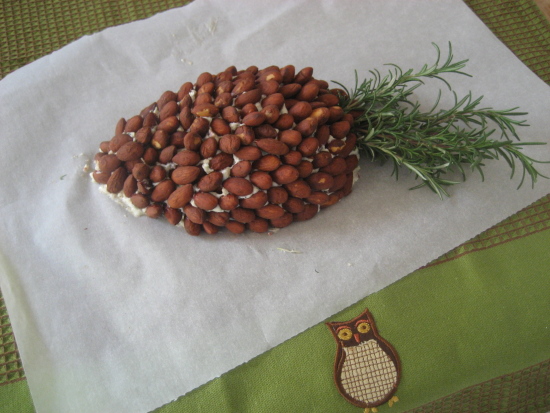
pinecheeselog.jpg
“Pinecone” Cheeseball I made a couple of weeks ago, recipe from Amy Sedaris.

1.
Why hasn’t anyone come up with a common nickname for the computer? There’s the “net” for internet and “blog” for web-log but none for the ubiquitous piece of technology I am currently using. In Spanish, it’s worse. I always feel like I’m gonna say an offensive word. “Com-PUTA-dora, ” I carefully draw out the word, hesitant about where to put my emphasis. It was easier in Spain, where computers are called ordenadores. Another mouthful sure, but not one to get you in trouble. Wait, maybe there is a Spanish nickname for computer? I can’t recall.

2.
Why do folks still care about what Nostradamus had to say? Was the dude ever right? How is it that his prophecies still hold some sway in our time? Is this how the bible started?

More stupid things to come…

What’s in your book?

slave_girl1.jpg

Thanks to Soledad en Masa!

1. Grab the nearest book.
2. Open it to page 56.
3. Find the fifth sentence.
4. Post the text of the sentence in your journal along with these instructions.
5. Don’t dig for your favorite book, the cool book, or the intellectual one: pick the CLOSEST

From Incidents in the Life of a Slave Girl:
“I shuddered to think of being the mother of children that should be owned by my own tyrant.”

Veteran’s Day

blog_atanasio_germany.jpg
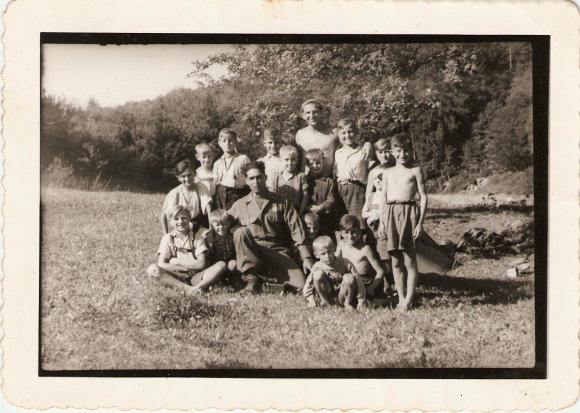
My grandfather, Atanasio “Tony” Garcia with the locals. Note the lederhosen on the young boys.

The war stories from my grandfather only came during rare moments. He never bragged about his service nor volunteered information about his experiences in World War Two. According to my uncles and mother, my Grandpa Tony did his best to not remember what happened during the war. I’m sure he wasn’t the only one.

blog_atanasio_auto.jpg
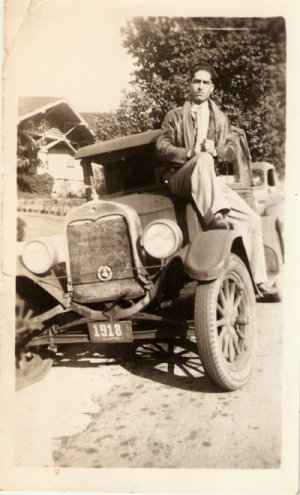
Grandpa Tony before the war. He sure loved his cars!

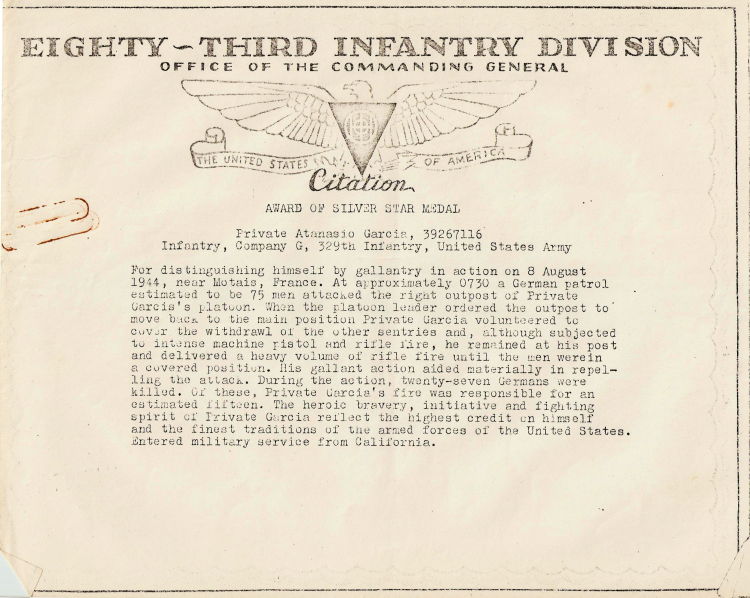
The stories about his service were eventually passed on to me. Being a Mexican in the US Army was a struggle in itself. He was treated as inferior and given riskier assignments and positions. However, he accepted them without protest and persevered. The document below explains how he received the Silver Star. Thanks to Hollywood films, I can imagine visually how the battle went down. More vivid to me is the story told to me by my uncle. For many years after my grandfather returned home from the war, my grandmother would sit him at the kitchen table in the morning and gingerly pick out pieces of shrapnel that were lodged in his skin. As part of the troop front-line, he caught the worst of a land mine. I wish I would have been old enough to ask my grandfather about these things but he probably wouldn’t have wanted to share them with me – too much shrapnel in his memories.

blog_tony_war_paper.jpg
Citation-Award of the Silver Star Medal, 83rd Division

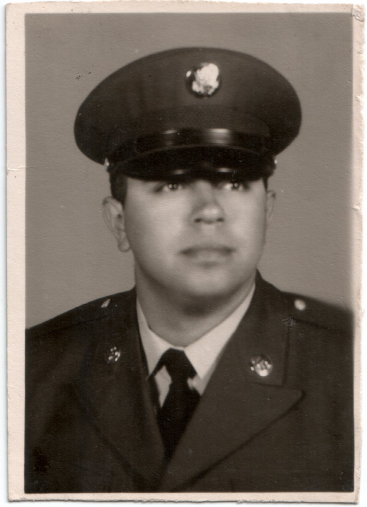
Thankfully, my father’s time in Vietnam was a little less traumatizing. As kids, my brother and I heard all his stories and would tease him a bit when he told the same ones again and again. We would often joke “Here comes Vietnam story number 103!” after he took us to see the latest Hollywood Vietnam era film. He might not like me to speak of it but I was pleased to know he questioned his command for their racist practices. Unfortunately, this got him in substantial trouble but he says he has no regrets. I’m proud to know I come from a family of folks who are not afraid to speak their minds and stand up for their rights.

blog_john_army.jpg
My father looking very young and handsome!

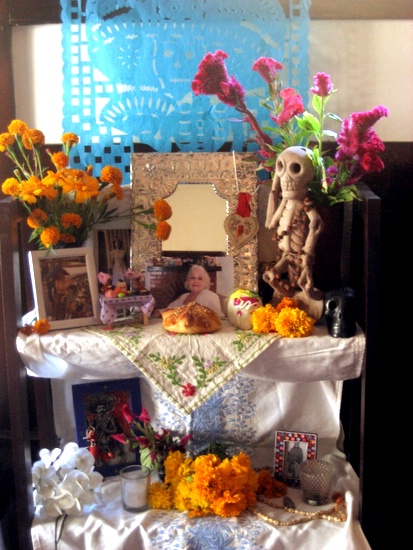
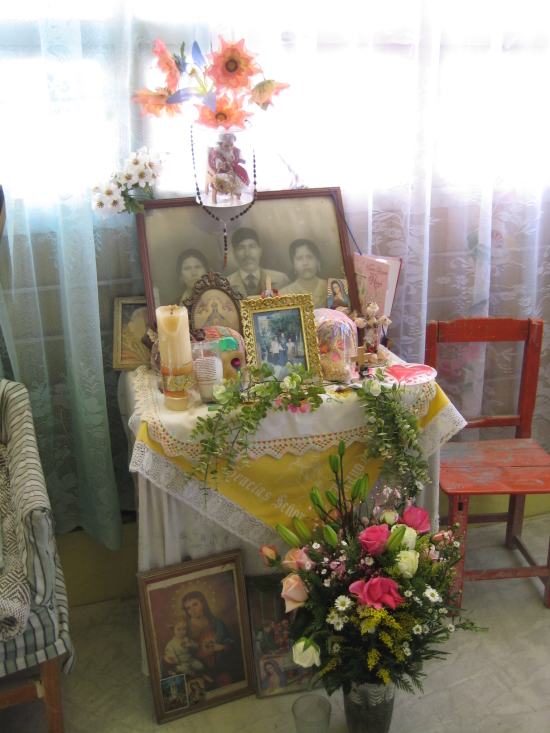
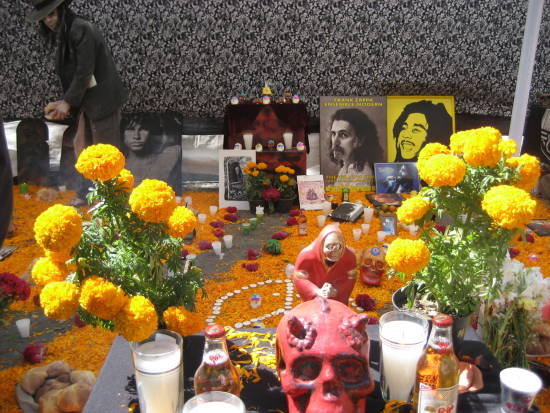
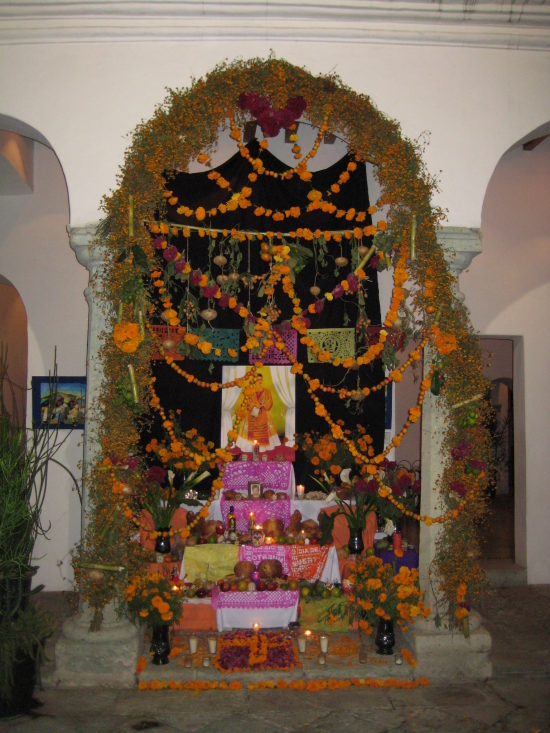
Dia de los Muertos: Altars

altar_20081.jpg
Altar dedicated to my grandmothers and some favorite revolutionaries: Emma Goldman, Zapata and Phoolan Devi, 2008.

Both my mother and grandmothers have always had different kinds of altars in the house, some have been religious and others, just a pleasing way of placing favorite objects. Until I was an adult I didn’t give much thought to this tradition, even though I found myself replicating them in my own home. The unusual use of materials and creative placement is what usually catches my eye in other people’s altars. I was already well acquainted with the examples I’ve seen here in Los Angeles – a public altar aesthetic that is familiar to those who attend Chicano produced Dia de los Muertos events i.e. lots of papel picado, glittery, bright colors. In Mexico I was able to see quite a few traditional and native altars or ofrendas (as they are called in Mexico) and have included these photos as examples of the various regional styles.

altar12.jpg
Private home, Nezahualcóyotl

altar13.jpg
Ofrenda for the rockeros, El Chopo, Mexico DF

altar5.jpg
Art Gallery, Oaxaca

altar9.jpg
Public ofrenda outside of a school, Oaxaca
Continue reading

Happy Halloween!

revengeazteca3.jpg
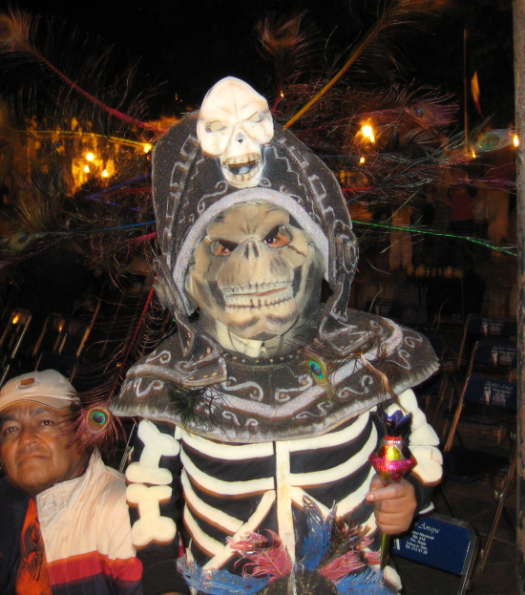
In Spain this is what is considered ghoulish. Revenge of the Las Indigenas-Oaxaca

What a difference a year makes! Last year I was sipping chocolate con leche in the beautiful zocalo of Oaxaca, watching the nightly parades of disfraces and bandas as they made their way through the cobblestone streets. This year, I’ve barely had time from work and my commute to even think about Halloween and Dia de los Muertos. For me, this is my holiday season, the time of the year I celebrate, decorate and look forward to. Unfortunately, the weight and responsibilities of daily life and the rat race have rudely interrupted my commitment to festivity. So this year, it’s about memories and I’ll start with photographs from last year’s celebrations in Mexico. Enjoy!

calabasitas1.jpg
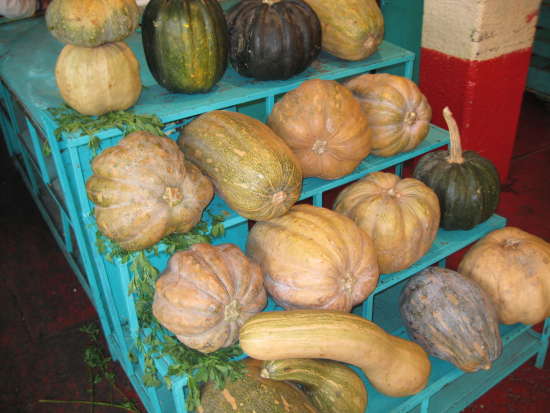
No orange pumpkins for sale

calveritas1.jpg
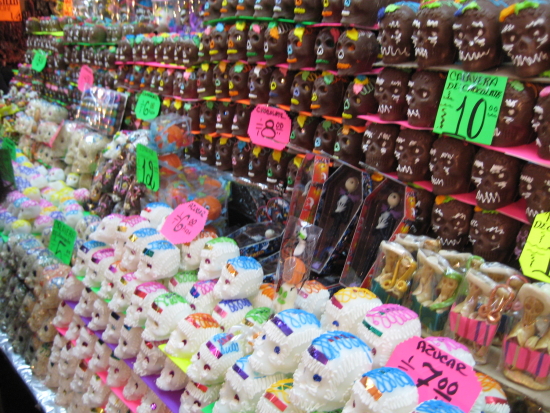
As tempting as they look, only returning ghosts are allowed to partake in these delicacies

candies_calab1.jpg
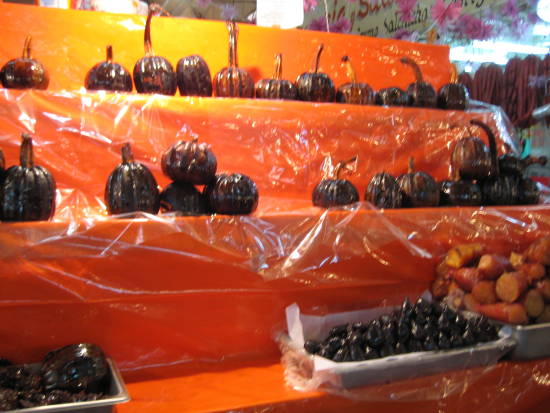
Candied squash

cempa2.jpg
Market in Oaxaca

cool_deco1.jpg
Mercado in Mexico DF

Continue reading

Los Angeles and My Family

p_trini_enrique_viz_blog.jpg
Trini y Enrique, Los Angeles 1920

It wasn’t until the last few years that I discovered my family had been living in Los Angeles much longer than I thought. I always assumed it was my great-grandmother Matilde who decided to move west after my 32 year old great-grandfather Zacarias died from turberculosis (a disease most likely related to his working in the Arizona copper mines.) Apparently, Matilde’s mother, known in our family as Nana Grande had already been living here in Los Angeles and according to family hearsay had also been running a boarding house in New York City. I can’t imagine this last part is true because the rumor concerns some salacious rumors of secret offspring and such and furthermore, how in the world does a Mexican woman of limited economic means move between Sonora, Los Angeles and New York in the early 1900s? I suppose it’s somehow possible.
As I slowly make my way through the old family photos, I see “Los Angeles” on a great number of them, such as this photo of my great-great aunt Trinidad and her husband Enrique Porter. I often wonder what life was like for them? My grandmother has told me countless stories of discrimination and yet, it seems she and her family easily intermarried and mixed/socialized with non-Mexicans. Not too much has changed in this city.

The Land Where Chachas Never Die

montebello-1.jpg

A friend of mine was back in town last week (she lives in Queens but grew up in SGV) and we had the following conversation:

Me: What have you been doing since you’ve been back?
Her: Last night I went to Punky Reggae at La Cita.
Me: Oh yeah, how was it?
Her: [long pause] uh…mmm…
Me: What? Too many hipsters?
Her: No…it was more like…if the Montebello Mall exploded!
Me: Ah…
[visuals flood my mind]

Another SGV friend claims the first Hot Topic store opened in the Montebello Mall (officially known as the Montebello Town Center). Can this be true? I think I was going to Schurr High School at the time (I lasted less than two months) when one of the punks came to school and said: “Oh my god, you guys! They’re selling Doc Martens at the mall!”

Favorite Video of the Week: Monotrona


Hawkeye and Firebird on Chic-A-Go-Go

Monotrona is a performance art project, best explained in this record review from the Ink 19 site.

Monotrona
Hawkeye And Firebird
Menlo Park

I first saw Monotrona lip-synching “Cadillac Fantasy” on public access show Chic-A-Go-Go a few years ago, and then like now, it was easy to conclude one thing: Like kim chee, Monotrona is one of those things that polarizes people. She sings in what appears to be phonetic Korean, over classic game soundtrack samples from the Commodore 64. There is a story attached to this — “Crime-Fighting is Fun and Easy!” — so I suppose it’s a sort of concept album but frankly, if some girl singing phonetic Korean over C64 bleeps and blorps hasn’t got you running for the hills or leaning in for a closer look, it’s not worth going into it. The Web site should provide plenty of entertainment while you wait for your copy to arrive.
Menlo Park: http://www.menloparkrecordings.com
Monotrona: http://www.monotrona.tv

“Cute” as the fake Korean chick might be, she is totally upstaged in this performance by the little girl in pink. Little girl in pink takes Hawkeye’s ironic, disjointed dance moves and makes them her own, finding rhythm where there was none and injecting sincerity into a performance I might otherwise roll my eyes at. Little girl in pink’s grand finale dance moves cannot be missed.